I came to the studio early yesterday, sat down here at my desk, and as is my habit, I logged on and pulled up Artistcoveries to ensure that the morning’s post had published. And there, lined up in a neat little row on the home page, I saw the new post as well as posts from the two previous days. I’ll admit, I did a bit of a double-take:
See any common theme here? Or, maybe I should just ask you to LOOK for something similar about these three most recent posts. Yep. Look. Look. Look.
Really, it’s not surprising that my thoughts right now are so focused — there’s another visual word — on looking and seeing. I said to myself, “Look, look, look!” and echoes of “See Spot run” trotted through my head. And why not? When it comes to art, observation is a key fundamental. Just as so many children learned to read by seeing Spot run and have Fun with Dick and Jane, our art education begins with seeing the lines, shapes, and forms of whatever we’re drawing.
It’s easy enough to simply say “Look at what you’re drawing.” It’s easy, too, to say “Look closely,” or to remind ourselves to “Be observant”. But… how? Are there certain techniques and exercises we can use to improve our observational skills as artists?
That was the question I posed to myself, and my mind immediately went to Bert Dodson and “Keys to Drawing“. I remember this particular illustration so well!

I read this book a few summers ago, and I enjoyed going through a lot of “observational drawing” practices, such as “The 5-Minute Burn” he advocates, and a number of “blind contour” drawings. In a “blind contour” drawing, we look ONLY at the subject, not at the marks we’re making.
This morning I wanted to learn more, though, and I wanted to start with the most basic, foundational ideas here. As I wrote above, it’s easy to say “Be observant”, but what does that really mean? Especially when we apply the concept of “observation” to art… well, what does it truly mean?
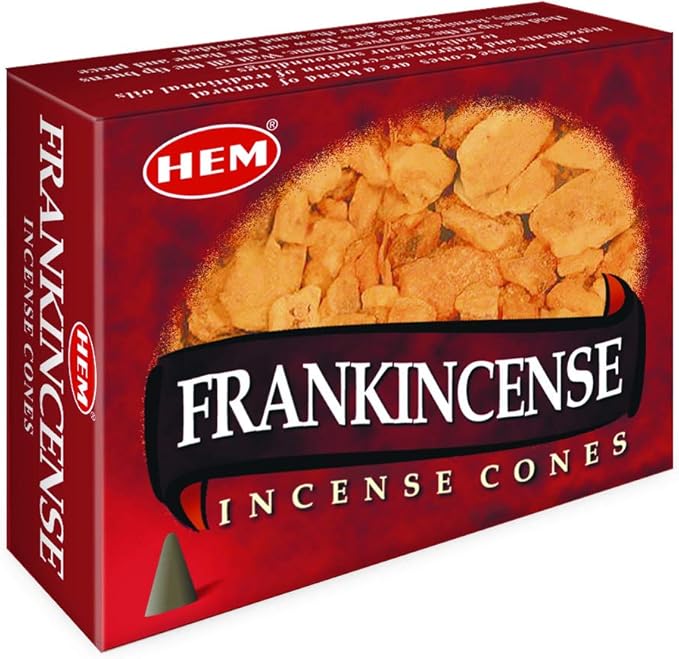
Being observant, first, means noting and acknowledging what we see. I recall learning in school that our brain processes an incredible amount of sensory information every second. Yes, of course. We see, we hear, we touch, we taste, we smell — all at a rather unconscious level. As an example, I’m not sitting here this moment telling myself that I see a notebook, several pencils, and assorted papers on my desk or commenting to myself on the enticing fragrance of frankincense from the incense I’m burning, nor am I actively making note of the sounds from the television or the click-clack of the keys as I’m typing. Yes, I can still taste that last bit of vanilla yogurt on my tongue, but I’m not sitting here consciously thinking about it. All of this sensory information is here, but at a subconscious level.
So, step number one in observation is to take the visual sensations and bring them to the forefront, to make the subconscious part of our conscious awareness. This should be a slow process. Doing this lets us see extraordinarily interesting things — even beauty — in the most ordinary things. This process helps us develop the ability to see patterns, to find similarities in disparate things. And, perhaps most importantly, doing this observational exercise makes us slow down our thought process, allowing us more time to fully see and appreciate the world around us.
A good way to define “artistic observation” — or any sort of observation, really — is to think of it as exploration. We’re not just looking, we’re searching — for whatever is there for us to find. And we can let our mind wander a bit as we explore, with so many questions
- Where do I see similarities?
- Do I see any contrasts?
- What else does this resemble?
- Do I see any movement?
- What is unusual or different?
We note sizes, shapes, positions, the relativity of one object to another, and we notice little details that we might have otherwise overlooked. Just now, for instance, I spent a little time observing that box of frankincense incense on my desk. It actually has information written in 7 different languages and scripts! I’d definitely never noticed that before. I’d never taken the time to look closely.
As artists, I think most of us have a “sense” of things — that is, we see beyond the surface and find an essential quality of a thing or a place. And in our art, it is this “essence” — this meaningful but unseen aspect we seek to capture. With this little incense box, I see it now not just as a small box with good-smelling cones of incense, but as a box of wonder and mystery. I find myself becoming more curious about frankincense — what it is, where it comes from, how it’s been used in religious and spiritual practices over the centuries.
Observation is an exploration, and our explorations can lead us to see the unseen. Whoa! That’s rather profound, don’t you think?
So let’s begin here. Let’s set aside a little time today to carefully and quietly observe the world, even if it’s only a tiny piece — like a little box of incense cones. And then, before we pick up a pencil or a paintbrush, we can better understand what we’re seeing — not just what it is, but what it tells us, what it wants us to share through our art.
Enjoy your observations today! Now, I’m going to light another cone of incense, close my eyes, and lose myself in that wondrous sense of mystery it evokes.


Thanks for this. Observation is one of the keys to mindful living and art. …. Maybe those things are intrinsically connected.
LikeLike
Yes, indeed, you’re on to something there! Observation is part of a mindful life and perhaps living a mindful life is an art!
LikeLiked by 1 person
Churches and church suppliers sell wonderfully authentic blends.
LikeLike
I love incense. Currently HEM is the brand I’m buying most, if for no other reason than that I can buy random “variety packs”, no knowing what fragrances it will include. It’s a bit like buying Topp’s Baseball Cards, you see. You pay your money, you take your chances, and you never know just what you’ll get! “Oh, doggone it… I already have “Forest” incense. Oh, look… there’s one called “Gold Rain” — that’s a new one.” It’s a bit of a game. The real fun, of course, is trying to make my own incense. My daughter, Lee, and I first tried this years ago and we stunk up the house so bad we had to open all the windows and doors to air it out. Since then, I’ve learned a little more. A few years ago for Valentine’s Day my husband and I made a very aromatic incense use rosewater, among other things. We actually made it in January so that the cones had time to thoroughly dry and harden and then we burned it on Valentine’s Day.
LikeLike
Fair. 🎂
LikeLike