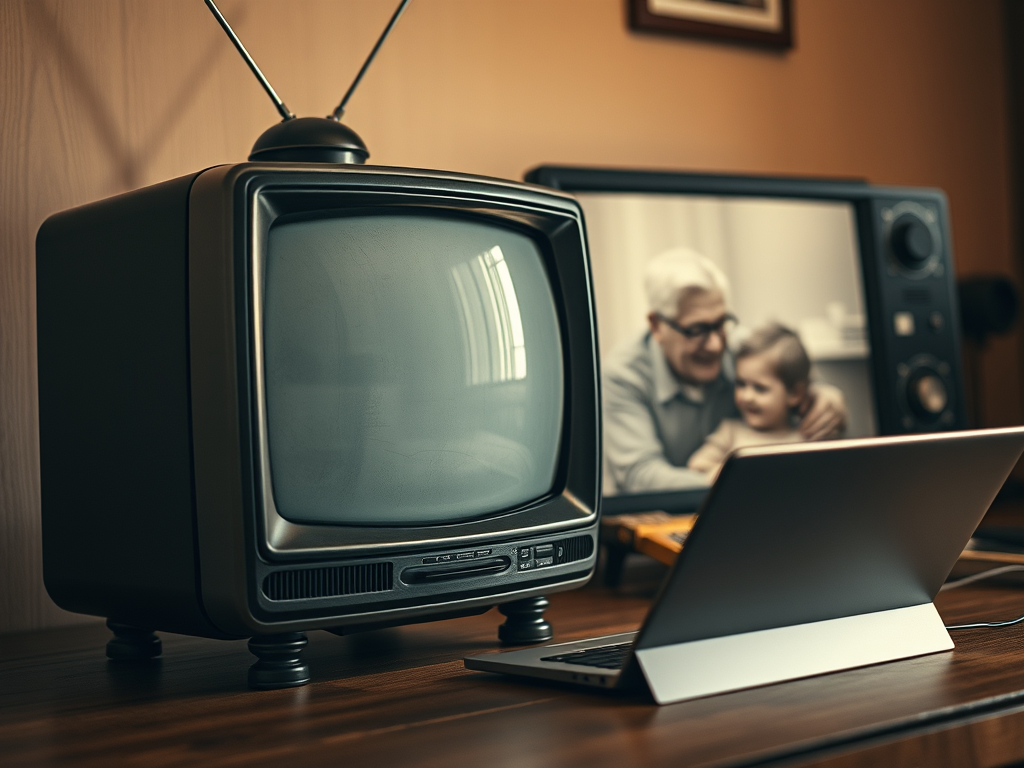
This headline is misleading, no doubt. Fortunately I’m not having any technical difficulties today, although I remember my grandfather teaching me (when I was very young) that audio difficulties were related to sound and visual problems, of course, were related to what we saw on our little black and white television. There’s quite a story about my grandfather, televisions, and technology — he was far ahead of his time in that regard — but I’ll save it for another day.
Unlike my grandfather, I’m a bit behind the times when it comes to technology. Oh, at first, I was quite a fan of all things new, exciting, and electronic. I was among the first to see the reasons for having a home computer. I learned “hyper-text markup language” long before editors like “Hot Dog” and online sites like Word Press or Wix made it easy to have a website up and running in minutes. I was the “go-to” tech support friends and family members called when they had problems with their computers.
That’s changed now. Technology has zoomed so far ahead of me that, frankly, I don’t even try to keep up. With a lot of things, I know HOW, but I’m not interested in using features. I don’t turn on my camera and take part in Zoom meetings. I don’t have a YouTube channel where I share art — or anything else — and it’s only now, after several years of fussing about it, that I’ve adapted to the Word Press “block” editor. Yes, it has some advantages. Overall, though, I was perfectly happy with the old, out-dated “classic” editor.
In that regard, maybe I could say that I do have technical difficulties, but it’s mostly from being a bit of a Luddite and not wanting to learn rather than from having any actual problems that need to be resolved.
The point of this post, however, is to take a look at how technology has changed — and is still in the process of changing — our world of art. So, in the guise of being a “techie”, I went right to the source — a friendly AI chat bot!
I posed a simple question: How does technology play a role in art… for artists? In a mere matter of seconds, the chat bot laid it all out for me.
I had my own ideas. As I sat down to put this article together, I was thinking about CAD programs (used primarily for architecture and technical specifications). I was thinking about Paint programs, and digital art programs such as Procreate and image manipulation programs such as GIMP, or Adobe Photoshop. But that’s about as far as my thinking went. Oh, yes, I did have a few thoughts about “art-themed” AI bots, such as Theo, which will gladly offer you a description of your work and suggest possible titles, all for a price.
And, of course, I thought about “image generators” — although, honestly, I don’t consider AI-generated images as “art”. Am I wrong? Maybe you do. Maybe AI is becoming so prevalent that people are accepting it as “art”. Maybe individuals with a knack for coming up with exactly the right “prompts” for an image generator are part of a new breed of artists. I don’t like that idea, really. But then again, I’m the old-fashioned Luddite who is falling more and more behind the technological times each day.
Setting aside our thoughts about AI-generated images, there are still many ways in which today’s technology does play a role in the world of art. The chat-bot quickly answered my question with this simple statement:
Technology has significantly impacted the world of art, offering artists a variety of tools to enhance their creativity and productivity.
The bot then pointed out a number of examples, so let’s take a look at them.
Digital Art Tools
This was what had first come to mind for me — all those software programs such as Photoshop or Procreate. Some are used to edit images, others are used to create images, and I can’t really do either. For a time, back in the days before I began learning to draw and “do art”, I enjoyed playing with photo editing programs, but I never really learned how. All those “vectors” and “layers” and technical jargon just gave me a headache. All I really did was play with colors and filters, and do crazy things with all the different controls. Sometimes I came up with things I liked. For me, at the time, that was as close to “art” as I thought I would ever get.
Artists today use digital tools to create incredible works, and you can see an interesting collection at Creative Bloq: Digital Art to Inspire: 21 Digital Artists You Need to Know About. The article shows examples of character art, game art, conceptual art, environmental art, and more! If you scroll through the site, you’ll also find links to tutorials for creating digital art.
If you’re interested in pursuing this field, Udemy is offering a course for $24.99. The Ultimate Digital Painting Course – Beginner to Advanced professes to teach everything from drawing fundamentals to professional painting techniques.
Scroll around a bit, do a quick Google search, and you’ll find many more “digital art” courses available at various price ranges.
Online Galleries and Marketplaces
This was an area where I had some familiarity, but “online galleries” never crossed my mind this morning as I thought about art and technology. One of the best known online galleries is Deviant Art, and there are many others. There are also commercial sites like Etsy where artists can set up shop and sell their works online.
While I intended to provide a helpful listing of places — such as ArtStation and Redbubble — there are simply too many to include, so if you’re looking to sell your art online, just do a quick search and you’ll find opportunities galore!
I did come across this helpful guide from Shopify: How to Sell Art Online: The Complete Guide (2025) It appears to have been recently updated, and it offers advice from both the artistic side and the business side of the art world.
Social Media
Another area I’m familiar with, but which I didn’t really think about as I pondered “art and technology” is social media. We’re talking about all the familiar places: Facebook, Instagram, and other platforms. I’ve rarely ever used social media as an artist. Occasionally I share my art online, but it’s not in an intent to promote my work. I once did put together a small Facebook group for myself as a landscape artist, but I quickly saw that I just wasn’t suited for that sort of promotion. For me, art is an exploration more than a business. Of course I’m delighted when someone wants to purchase one of my paintings, but I derive more pleasure from the process of creation itself, and from sharing my experiences through this blog.
I am, however, a member of many different Facebook art groups, and I can attest that some are better than others. There are groups devoted to various media — traditional oil painting, soft pastels, oil pastels, watercolor — groups devoted to art genres, groups devoted to art journaling, drawing practice, and abstract arts. Of course, if you’re on Facebook and have interacted with any sort of “art post”, your feed is most likely already filled with invitations and advertisements relating to art.
Personally, I don’t mind “art ads” for supplies popping up in my Facebook feed. This was how I first discovered gansai — through St. Louis Art Supply.
I’ve also made a lot of friends through various art groups, so yes, social media is definitely an advantage for artists today. Personal connections through art clubs and shows is important, but especially as I grow older, it’s not always easy to get out and participate in art events. Yet I can easily be part of eteliers and art activities through social media.
Artificial Intelligence and Virtual Reality
Here is where I begin to draw lines between what IS and what IS NOT art. I’m “old school” — meaning, quite simply, I’m old. I don’t want to learn a lot of new technological skills. I struggle to come up with even a basic prompt for an “image generator”, and in some respects, I don’t even consider that ability as a highly-valuable skill. Maybe you disagree.
I suspect that there is a new generation of up-and-coming artists who will make incredible use of artificial intelligence and virtual reality in their work. They will create breath-taking “immersive” and “interactive” experiences. In the future, perhaps going to an art exhibition won’t involve looking at paintings on display, but will mean putting on a pair of headphones, goggles, or whatever, sitting back, and being digitally transported to a world of color and design, complete with the sounds of rain, the fragrance of perfurme, the warmth of the sun, or the coolness of a moonlit night. All with carefully curated music, no doubt.
I think that art will cease to be something we SEE, but something we EXPERIENCE with all our senses. What do you think? What do you foresee as the future of art as it combines with technology?
3-D Printing
The AI bot also mentioned 3-D printing, which had never entered my mind. The bot explained to me that “artists can turn digital creations into physical objects using 3-D printing, blurring the line between digital and traditional art forms.”
I think, overall, that it is this “blurring” that is both exciting and disturbing to me. Even in my pursuit of traditional, visual arts, I’ve occasionally come to various lines between “is it really art?” and “no, this is not art.” Technology creates more of those fine lines, makes us question the processes of art more than before, and yet it also provides new opportunities for creative exploration.
In so many ways, I’m old-fashioned. I’m still stuck in a world that is fading away. I want ART to be ART — the sort of ART I’ve always known and loved. But technology is changing our world, not only for art and artists but for each and every one of us no matter what fields we work in, and no matter where our interests lie.
I can’t keep up with it. I try to stay reasonably well-informed, and truly I can appreciate the wonders of modern technology — our ability to communicate quickly and easily, the ability to create websites, to share our art, and our ability to learn from others. I appreciate the friendships made possible through the internet and social media platforms.
Art is changing. We can all see it happening around us. I’m willing to make some changes and concessions, but for the most part, my art will still be old-fashioned.
Art means sitting here with a pencil and a sketchbook. Art means standing at my easel, putting colors on a canvas. Art, for me, means looking back to the past and learning about famous artists and their works. Yes, I’d rather look back than look forward. I should be doing both, of course.
Where do you see “art” going in the future?
What changes have you made in your art because of technology?
Please, share your thoughts!
Note: Yes, today’s feature image was generated by Word Press AI, from a prompt also created by Word Press AI.


Great post! Like you, I think technology has overcomplicated many things unnecessarily and I much prefer simplicity. The sheer number of tools and possibilities nowadays is overwhelming. The simplicity of putting pen / brush to paper, or using the traditional methods in post processing (exposure adjustments, dodging and burning, double exposures, compositing etc.) are a lot more satisfying for me personally than using AI.
LikeLiked by 1 person
Yes, there there are other facts… I know how soothing and calming it can be to sit outside on a spring or summer day, quietly sketching. It’s almost a form of meditation. I can’t imagine getting any of that sort of “vibe” from “techie” art.
LikeLiked by 1 person
As an artistbI only use A.I. image generator for poetic written work mostly. I consider it a visual accompaniment but I would never take credit for it
LikeLiked by 1 person
There’s definitely a place fo technology in art, and it’s always fascinating to see what people can do with it. I just hope we never get to a point where “old-fashioned” art is disregarded or looked upon as something lesser.
LikeLiked by 1 person