
I love browsing through art books at Amazon. Actually, I love browsing through art books anywhere I happen to find them, but it’s especially fun at Amazon. I have a Kindle, and I have Kindle Unlimited, so I download lots of books to help me with my art studies.
Among the books I enjoy most are old art books — the ones written in almost archaic language, are now in the public domain, and which most people don’t like to read. Maybe it’s because I grew up with my grandfather and became accustomed at an early age to hearing and reading old-fashioned language. Or maybe I’m just weird. Either way, I love looking for these old treasures, downloading them to my Kindle, and reading them each evening before bedtime.
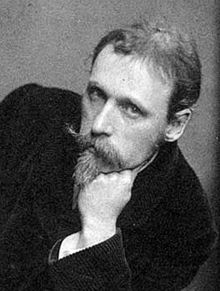 My latest favorite is Line and Form by Walter Crane. He was an English artist, primarily an illustrator, and is considered to have been one of the most influential children’s book creators of his generation.
Line and Form was written in 1900, and contains a few long-winded sentences, such as this jewel:
“Then, again, when we come to the expression of ideas—of thought and sentiment—we find in line an abstract but direct medium for their illustration; and this again, too, by means of that law of inseparable association which connects the idea of praise or aspiration and ascension, for instance, with long lines inclining towards the severe vertical, as when we draw a figure with upraised hands; while the feeling might be increased if led up to or re-echoed by other groups and objects in the composition, forming a kind of vertical crescendo on the same principle which we were considering in regard to the expression of lateral movement.”
Did you follow all of that? Essentially he’s pointing out that vertical lines suggest praise, aspiration, and ascension — another one of the ways in which art speaks.
Over the summer, I have been doing a lot of drawing practice, and I have learned more than I ever thought possible. Finding Crane’s book fit right in with my daily drawing practices, and I highly recommend Line and Form to anyone who (a) wants to improve their understanding of drawing techniques, and (b) has the patience enough to wade through the words.
That said, let me share a little information for those who are interested in this book — or other old, public domain books.
First, books that are in the public domain can usually be had for naught. Uh, well, what I mean — forgive my own archaic English — you can find them online for free. But, there are also those who hope to profit from them by selling them. Do exercise a bit of caution so you don’t end up paying needlessly.
Second, keep in mind the old adage that you get what you pay for — meaning, in this case, that public domain books online may not be properly configured when you read them on an electronic device, pages may be missing, and charts and illustrations are sometimes not included.
So, at Amazon, you can find Line and Form available for Kindle at no charge. What you’ll quickly learn if you download it, however, is that there are no illustrations, thereby making the book more or less meaningless. What’s the point in reading about line and form when you can’t see lines and forms?
You will also find Line and Form available for Kindle at a price of $4.74. Whether or not this edition has illustrations, I don’t know. I looked through the sample provided by Amazon, but it covered nothing more than the Preface and the lengthy Table of Contents.
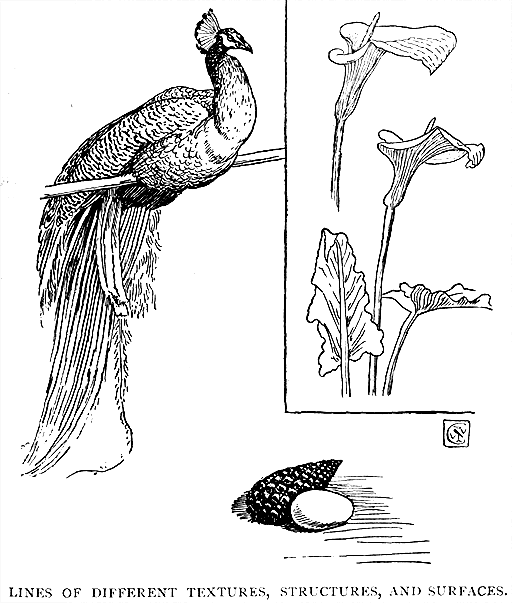
Amazon, however, is not the only source for public domain books. I quickly visited Project Gutenberg, searched for the book by title, and came up with lots of different options for downloading — including options complete with illustrations, such as the one below:
While many artists enjoy trying new techniques, new materials, and new ways of approaching art, there is still something to be said for getting back to basics and thoroughly learning the essential elements of drawing. I don’t think we can ever go too far wrong by studying those whose works have stood the test of time. Their words to us may sound quaint and old-fashioned to our ears, but their ideas can help us take our artwork to another level.
Oh, one other thought. If you browse books at Amazon, you’ll also find lots of Walter Crane’s illustrated children’s books. They’re available at reasonable prices and are definitely worth viewing.

Happy drawing and painting!
 Artistcoveries
Study of one’s art is always an essential element of success!
LikeLiked by 1 person
Yes, and I love reading older books about art. Patience was always such a virtue in the past. Today, so many people want to hurry up and finish things. I know I’ve felt that way many times. Reading books written in the early 1900s helps me remember to slow down and take things one step at a time.
LikeLiked by 1 person
That is a very good point. In our world of multi-tasking and 24/7 slowing down has lost much of its world valuation if not its allure.
LikeLiked by 1 person
Yes, it seems like everyone is in a rush nowadays. I’m grateful for opportunities to slow down. 🙂
LikeLiked by 1 person
I took some time this morning to paint. It was very nice.
LikeLiked by 1 person
We made an rather unplanned trip out of town, so I haven’t done any painting for several days. We’re back home now, and I’m looking forward to getting back to my painting.
LikeLiked by 1 person
I love art books too! Sometimes I just check out the artwork, but I do actually read some of them.
LikeLiked by 1 person
I’m fascinated by the stories I read about different artists and their approach to art — especially landscape artists. I should have been an art history major LOL.
LikeLiked by 1 person
I like to read about the artists too – really any creative types. I like to read about writers and musicians too.
LikeLiked by 1 person