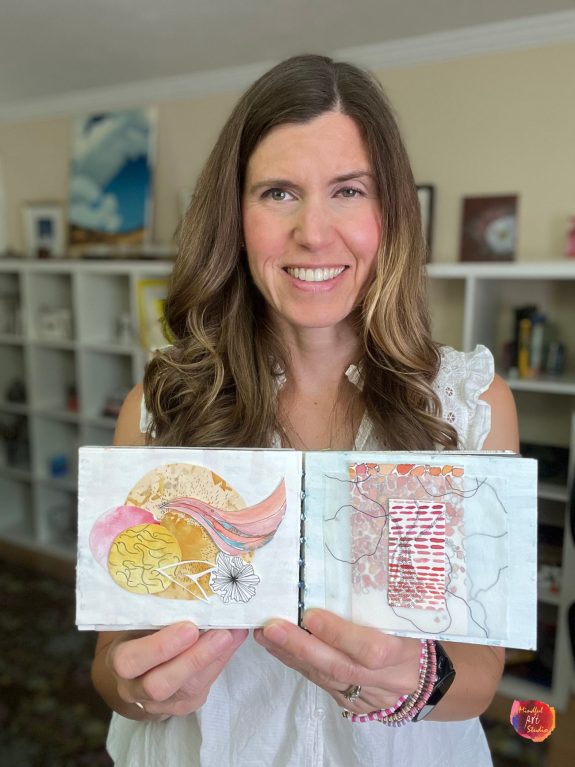
I first “got to know” Amy Maricle through the Sketchbook Revival program, although I don’t recall which year she was a featured presenter. When I say that I “got to know” her, I’m not speaking at a personal level, but as a member of the art community. In other words, I attended her free workshop, got to know a little about her and her art philosophy, and I later visited her website and took part in several of her “slow drawing” exercises.
And, that said, I must be honest. I was NOT a fan of “slow drawing”.
Amy Maricle is a former art therapist who has now turned to helping others through her online site, Mindful Art Studio. She shows us how “slow art” can be a mindful, meditative practice, how art can help us slow down our thoughts, relax, and enjoy the creative process.
While I definitely can agree with art as a form of meditation, I personally don’t do well with the repetitive aspects of Amy’s “slow drawings”. Here is one example — a slow drawing practice from one of her free weekly sessions:
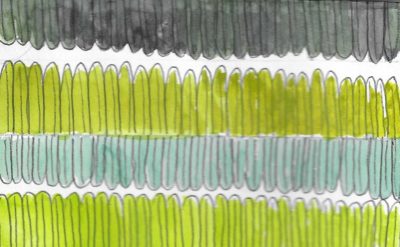
.
Other slow drawing practices have included filling a sketchbook page with circles or squares or any other repeated shape. In fact, it’s been said that any shape can become interesting if you repeat it. Maybe. Maybe not. I’m not sure I completely agree, but as one of those little “artistic gems of wisdom” it’s something to keep in mind.
Slowing down is, of course, a key element in becoming more observant, and I have been working on this in my drawing exercises, asking myself how slow I can go. That’s a bit different from Amy Maricle’s “slow drawing” concept, however.
Her patterns are primarily nature-based, which is nice. Nature is inspiring. And truly I love looking at her sketchbook pages, filled with fascinating designs. “Slow drawing” as Amy teaches it, is similar in some respects to doing “Zentangles“, but it’s not quite the same. Having tried both, I personally liked doing the Zentangles a bit more than “slow drawing”, but neither practice really “clicked” for me.
But let me “slow down” here for a moment so you can see for yourself what Amy Maricle does with her slow drawings. Here you can see how she creates her patterns.
.
Now, why am I not embracing this? Well, I’ll just say it. These “slow drawing” movements make me nervous. Rather than calming my mind and body, these exercises make me anxious. I don’t relax; I tense up. After trying several times, I finally admitted that while I like the concept in principle, I don’t enjoy it in practice. And, that’s fine.
I’ve developed my own sort of “slow drawing” practices. For me, part of the problem with “slow drawing” and with “Zentangles” was a sense that my drawings lacked meaning or purpose. But, I can apply the idea of slowing down and creating repetitive marks to actual drawings, and this I enjoy. If you’ve been a reader of this blog in the past, you’ll probably recall my ink drawing of a mythical sea dragon:

.
Now, this was fun! This was tedious in its own way, and yet I enjoyed every minute I spent on this very slow drawing. I wasn’t creating meaningless marks. I was drawing a dragon.
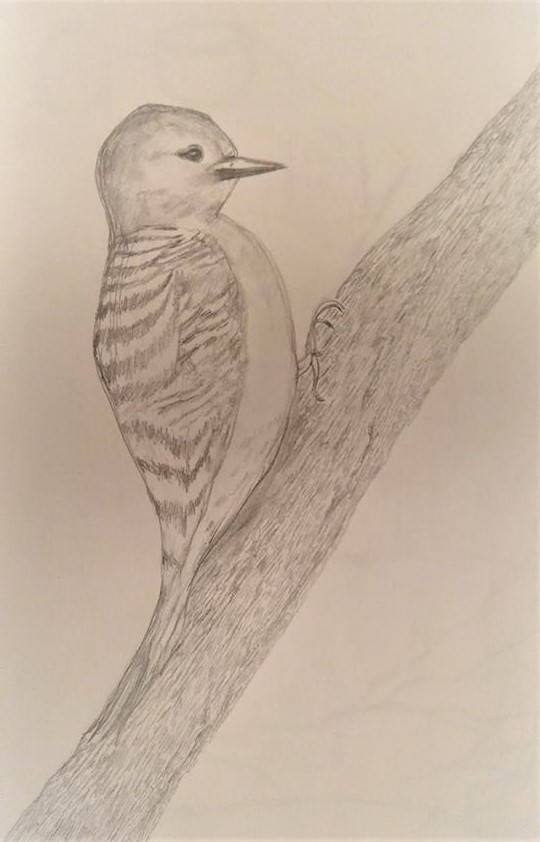
Another example of my personal version of “slow, meditative art” was this graphite woodpecker.
.
Again, lots of repetitive marks here, yet, also a clear objective — a woodpecker pecking away at a nearby tree. It was quite relaxing to sit there on that summer’s day, to listen to this determined little bird, and to quietly make marks in my sketchbook.
But, I digress. This post isn’t intended to be all about me or my drawing preferences. Today I’m writing to share Amy Maricle’s book on slow drawing. The title is “Draw Yourself Calm” and it features twenty-five patterns to help you relax and de-stress.

.
You can see a “slow” flip-through of the book at Amy’s website: Draw Yourself Calm. Once again I’ll say how much I enjoy looking at Amy’s creations. Her approach to slow art doesn’t quite fit my needs, but I’m most likely the exception here. I’m the “odd one out” who has a different response to her slow art.
Yet, even so, I’ve learned from Amy Maricle. I’ve learned that art can be a quiet, mindful practice. Even if her “patterns” weren’t right for me, the method of slowing down and creating my own form of “slow art” has been valuable. I’ve used it many times when out sketching in nature. It’s easy to get into a quiet, meditative, “slow” state of mind when surrounded by lush green grasses, blossoming flowers, and tall trees.
For me, it hasn’t been so easy to do this while sitting inside here in my studio. So this is why I’m turning to Amy Maricle and “slow art”. I need to relax, to let go, to “de-stress” from all that’s been happening in my life. Looking at Amy’s slow drawings, remembering my own slow drawing techniques, and letting myself slip into that almost Zen-like state are all things I need right now.
While I won’t be following along with Amy Maricle and her book, it’s one I will highly recommend for others — for those who fully appreciate the process of slow, repetitive drawing, for those who do become relaxed by creating nature-inspired patterns.
Of course, you can always “try before you buy” by visiting Amy’s weekly online sessions. You can use the link here to sign up for her newsletter and receive weekly emails with links to her live videos. I might even join you there! It’s been years since I’ve taken part in a slow drawing workshop, and maybe it’s time for me to try it again.
So… see you there!
 Artistcoveries
This sounds so inviting! Lately, my art has been less detailed, more shape/tone oriented–but I’ve been looking at some art I did 35 years ago, and it’s so detailed! I feel myself drawn towards that slow-art-pattern approach, so maybe I’ll try it!
LikeLiked by 1 person
I’m planning to catch the Wednesday session — the 21st, I believe it is. I might find that I really enjoy it now!
LikeLiked by 1 person
This sounds so inviting!
LikeLiked by 1 person