
Back in the day before I “became” an artist… back in the day when I used to dream about what I would draw and paint IF I were an artist… back when I looked at art and wished I could create beautiful works of my own… there were flowers. I’ve always loved flowers. Who doesn’t?
When I was growing up, we had tulips and daffodils growing all around the house, plus irises, and brightly-colored tiger lilies. We had tiny little lily-of-the-valley plants, and gladiolus, and lots and lots of zinnias.
It’s not surprising, really, that when I finally did begin learning to draw, many of my earliest efforts were flowers. I followed along with Kate Berry in “Drawing Lessons for Beginner Artists” which included simple illustrations such as these:
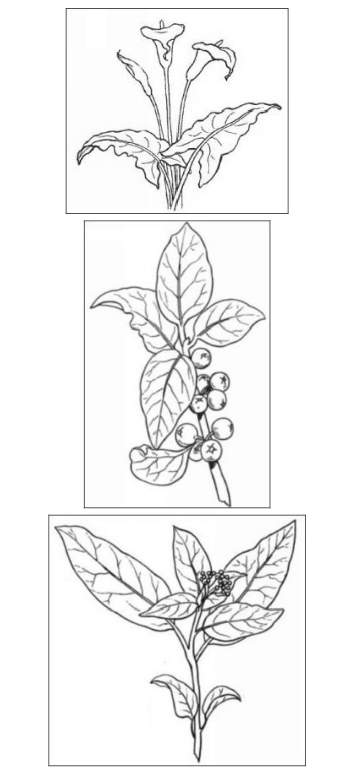
I was quite pleased with myself, quite proud of my progress, and then… quite crushed when I put the book aside, stepped out into the yard, and attempted to draw the hostas we had growing around a tree.
I was even more disillusioned when I picked up a book on botanical drawing and learned that botanical artists were supposed to reproduce their subject in exact, paintstaking detail. This was quite unlike Kate Berry’s instructions to simply draw and enjoy!
There are, you see, two very distinct and very different approaches to “botanical art” or “nature drawing”. In my mind, I separate the two approaches by using those appellations. Nature drawing is the simple, sit-down-and-just-draw approach that I take. Whether I’m trying to capture a little of the beauty of an iris or working diligently to sketch a few pears, I try to create drawings that are recognizable, somewhat realistic, but I make no attempt at exact, precise replication.
I am NOT a botanical artist.
Let me repeat that. I am NOT a botanical artist. While I once thought that this was the sort of art I wanted to create, I’ve since learned that it’s just not how I want to spend my drawing time. Oh, I still admire botanical artists, and maybe I would be one if I had that sort of talent, and that sort of patience. I don’t. So, again, I am NOT a botanical artist.
Botanical art — that’s the other approach. That’s the approach that says the goal is a perfect representation of the subject, that if a leaf has a slight little tear, the drawing must show that slight little tear, that every little variation of color must be observed and noted, that the size and shape of each petal must be completely accurate. Well, folks, if this is how you want to draw, I’m happy for you! I still look at gorgeous botanical illustrations and sigh, knowing that drawings like these are far beyond my capabilities.
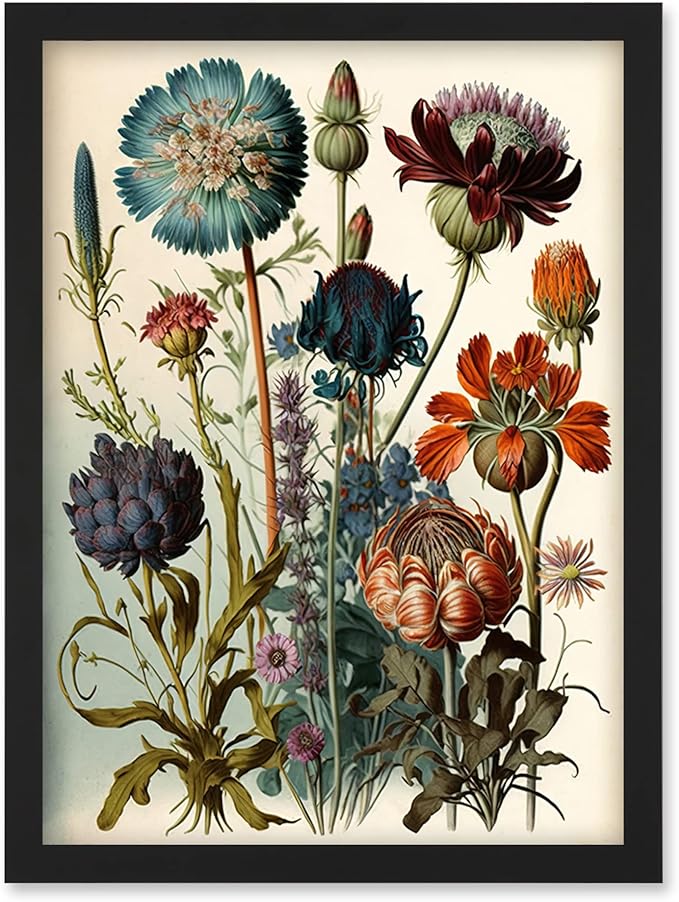
For those whose interests include botanical art, there are many valuable resources that can help you develop your skills and share your work. Let’s take a look at a few.
Books on Botanical Art
The Joy of Botanical Drawing: A Step by Step Guide to Drawing and Painting Flowers, Leaves, Fruit and More by Wendy Hollender

.
Botanical Drawing: A Step by Step Guide to Drawing Flowers, Vegetables, Fruit, and Other Plant Life by Penny Brown.

.
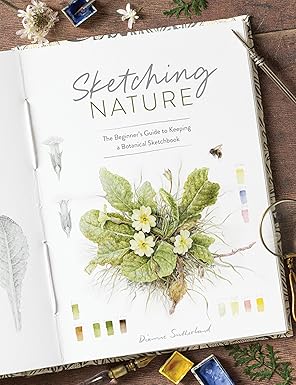
Both of these books have been around for several years. A more recent publication — one that intrigures me — is Sketching Nature: The Beginner’s Guide to Keeping a Botanical Sketchbook.
This is from botanical illustrator Diane Sutherland.
.
If you’re interested in botanical art, then you’ll want to check out the American Society of Botanical Artists. Their mission is “to provide a thriving, interactive community dedicated to perpetuating the tradition and contemporary practice of botanical art.” Their activities include exhibitions, education, and outreach to artists through grants, projects, conferences, and a regular journal publication.
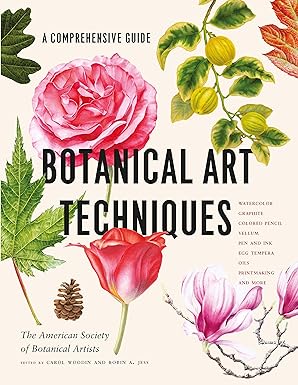
Also published by the ASBA is this book: Botanical Art Techniques: A Comprehensive Guide to Watercolor, Graphite, Colored Pencil, Vellum, Pen and Ink, Egg Tempera, Oils, Printmaking, and More
.
Additional Resources
Also of interest will be the Botanical Art & Artists website, a compendium of art, history, botanical science, and valuable resources for artists and educators. The site includes links to numerous botanical groups, including an index of botanical art groups on Facebook.
And to inspire you, take a look at these gorgeous botanical illustrations from from Unsplash. Plus PICRYL offers many illustrations that are in the public domain. You’re sure to find inspiration here: Botanical Illustrations Free. While these images are free, you can make a donation if you wish.
An important thing to remember if you choose to pursue botanical art is that it’s more than “just drawing and painting”. It’s about the science of botany, so along with developing art skills, you’ll need to learn botany either through self-study or actual classes and courses.
All in all, for me, botanical art — no matter how much I might wish I could create it — is not a reaslistic objective. I lack the skills, I lack the knowledge, I lack the patience. So I’ll enjoy viewing botanical art and I’ll enjoy making my own simple little sketches of flowers and leaves and pears and pumpkins. I won’t concern myself with accuracy and scientific, botanical information. I’ll just enjoy what I can do and leave the rest to the talented artists who can create such exquisite, detailed drawings and paintings.
 Artistcoveries
Beautiful Flowers.
LikeLiked by 1 person
I love seeing beautiful botanical art. It amazes me at how anyone can create such beautiful illustrations.
LikeLiked by 1 person
Thanks for all the stuff on botanical art.
LikeLike
More tomorrow 🙂
LikeLike