
We’ve had quite a bit of windy weather in recent weeks. Although March has always been known as the month for high winds and kite-flying, around here it seems that those windy days have continued on through April and even now into May. Wind can be a destructive force, and yet I am fascinated by it. And I know I’m not the only one.
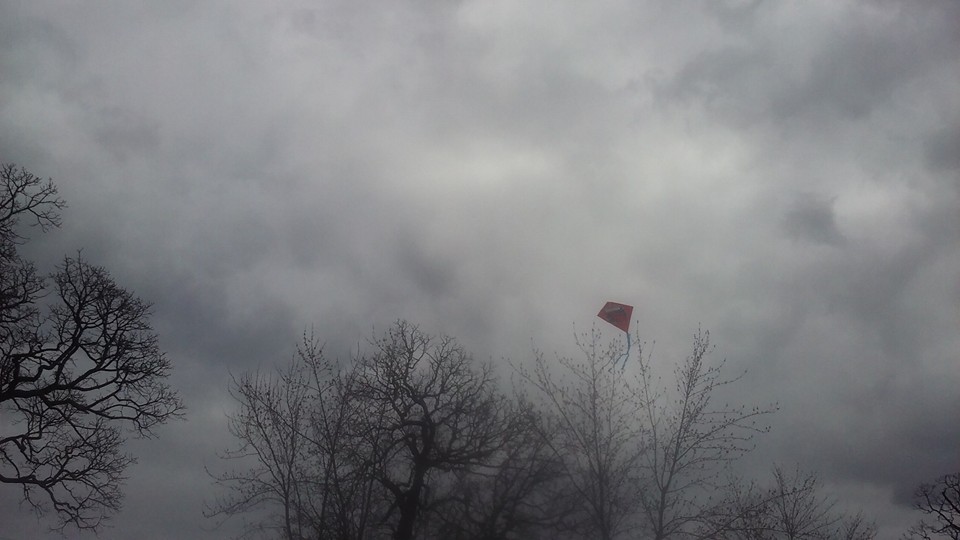
Growing up, I loved flying kites, or actually, I loved trying to fly kites. Mine never soared too high. Most ended up stuck in trees. Even now, that’s how most of my attempts end up, as you can see from this picture taken a few years ago.
.
What is it about the wind that captivates us so? We can feel it, we can hear it, but we can’t SEE it. So allow me to pose a question: How do we draw the wind? The real answer, of course, is that we can’t. We can only try in some fashion to draw the effects of the wind, as in this “very simple” tutorial:
Yet while sight is a key principle in art, creativity goes far beyond what is visible to our eyes. True artists search for an essential spirit, an aspect of a thing or a place or even something as ethereal as the wind. And art is not always limited by lines or marks on paper or canvas. Art takes many forms.
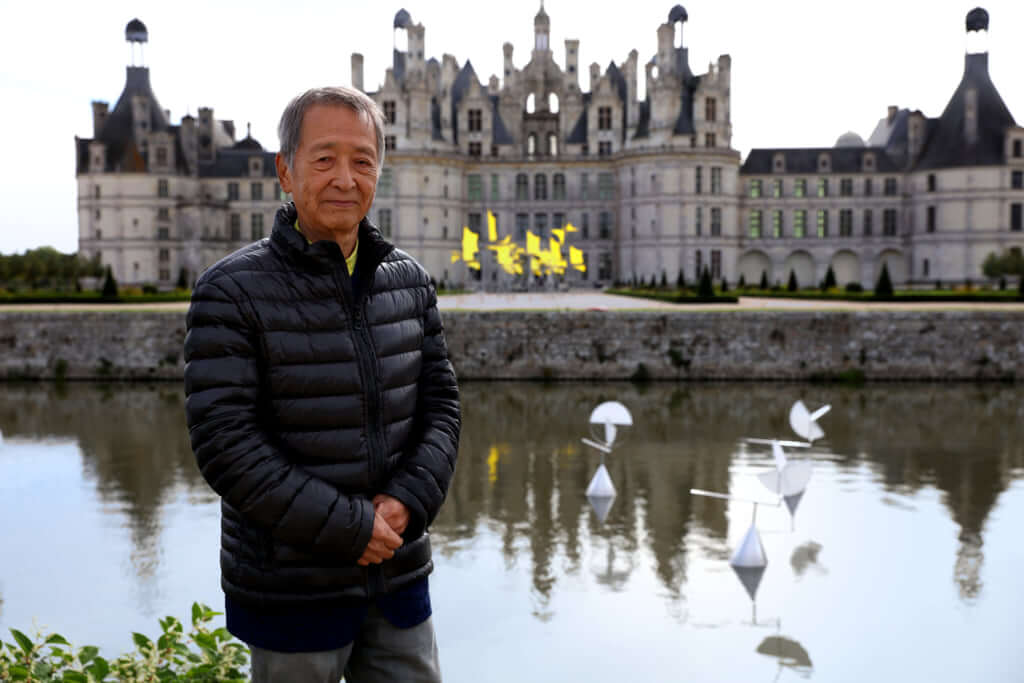
Today I’m sharing a bit about a kinetic artist, one who works with movement and energy. His name is Susumu Shingu. He is a Japanese artist who works primarily with “wind sculptures”. He was trained at the University of Fine Arts in Tokyo with a focus on oil painting.
.
The story goes that as he began exploring abstraction in art, he hung a painting outside, wanting to photograph it. The wind kept “interfering”. Being mindful and observant, he recognized something intriguing in the concept of three-dimensional art. He then began to incorporate natural forces into his work. Wind could make things move; wind could create sounds. He also changed the materials he was using as traditional art materials were often too heavy to produce the effects he wanted or they degraded too quickly in outdoor conditions.
Shingu sees himself and his work as “ways of translating the messages of nature into visible movements.”
It is not enough, in my opinion, to “see” Shingu’s works in online photographs. This sort of “kinetic” art is meant to be viewed in movement. Enjoy this look at 16 of his creations:
You can also visit “Atelier Earth“, the artist’s website to learn more about his work and the many open air events and projects he creates and shares with communities around the world.
One project now “in the works” is called “The Wooden Zoo”. Children under the age of 15 are asked to submit drawings of animals. Eventually three young artists’ drawings will be selected and used as visual drafts for sculptures by Shingu. These will be installed near his “Wind Museum.”
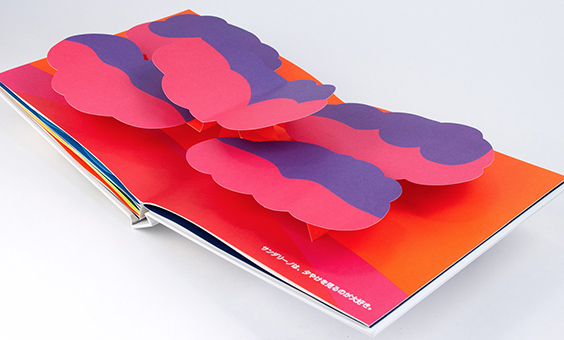
Shingu is not just a sculptor and “kinetic artist”. He is also a prolific author. He’s written many colorful children’s books which feature kinetic aspects, such as “Sandalino“.
.
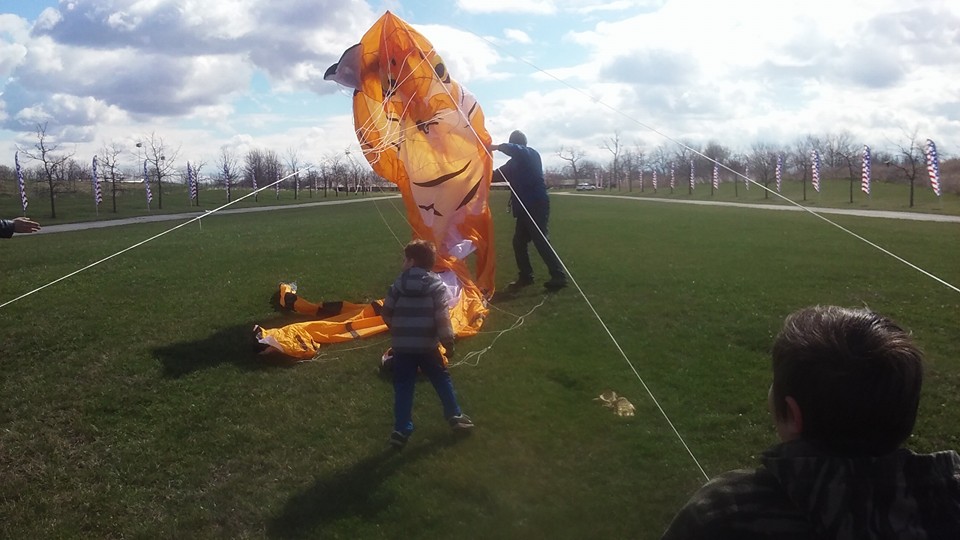
There’s something wondrous about how children, kites, colors, wind, and movement all go together. I recall the excitement literally “in the air” when we took several grandsons to a “Kite Festival” at Powell Gardens when they were young. They even had opportunities to hold the guidelines to these gigantic kites.

I love how Susumu Shingu approaches the world of art with the same childlike curiosity, how he embraces nature, and how he encourages young artists to interact with the world around them through art. His works are truly “living” forms of art.
We may not be able to catch the wind and keep it, but we can invite it in and we can experience it in meaningful ways. And in this day of environmental concerns with dwindling natural resources, we can draw upon the power of the wind in practical ways, as well as artistic works. So, again, I salute Susumu Shingu for all he does by calling attention to the wind, by getting us outdoors, and for sharing his visions of things unseen.
 Artistcoveries