In the earliest days of my art journey, I wrote about Telling Stories Through Art. It was a fun concept for me as a beginning artist. As we all know, pictures do tell stories, and at the time I wrote that post, I thought that was all there was to know about narrative in art.
Now, a little over three years later, I’m beginning to realize how much more there is to the entire concept of narrative. I’ve had quite a good time exploring this idea and coming to my own understanding of it.
Where before I saw art narrative only in visual terms, I now see it through thoughts and feelings, moods and emotions. I see it not only in the subject of a painting, but also through the techniques the artist has used, through the colors, through the values, and through symbolism.
Today, I intended to write a thoughtful post about narrative in art — where it comes from, how we develop it, how we use our artistic knowledge to express it — but then, as so often happens, I got side-tracked.
So, today’s post is only quasi-thoughtful. It is Friday, so let’s just call it a “Fun Friday” and not take ourselves too seriously.
What I stumbled across was a list of paintings with hidden meanings. These paintings tell unexpected stories, and it was interesting to read about them.
10 Paintings With Hidden Meanings
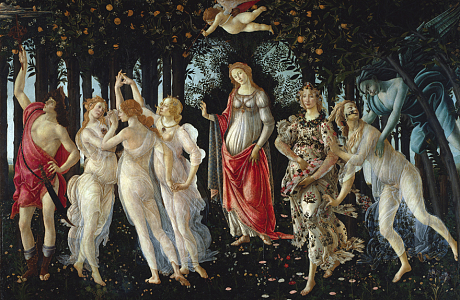
“A joyous celebration of female beauty and gaiety? An exuberant pagan ode to the season of renewal? Nothing so simple. Botticelli’s masterpiece is not only a botanist’s dream, with 500 identifiable plant species, but has been variously interpreted as containing the clues to a plot against the Medici and an attempt to reconcile the ideals of Christianity, Judaism and Islam, a pet project of Neo-Platonist intellectuals at the Medici court. If that seems far-fetched, Renaissance Florence rivalled Sixties California for wacky theories and spurious gurus. Botticelli attached himself to one of them, the hellfire preacher Savonarola, and his work took on a more austere and mystical turn, before his spiritual guide was burned in the city’s main square in 1498.” – From 10 Paintings with Hidden Meanings
Included on this list are the Sistine Chapel Ceiling, The Last Supper, and Francisco de Goya’s Naked Maja. All in all, it’s an interesting — and amusing — read. I came away with a deeper understanding and appreciation for narrative in art, and an awareness that sometimes art is about far more than meets the eye.
 Artistcoveries